
The central beating heart of it all.
Everything else at Hickory Run was designed to be in harmony: farm, land, wildlife, good food, and vibrant walkable community.
Most communities with a farm built the houses first and added a farm a few years later on what was left.
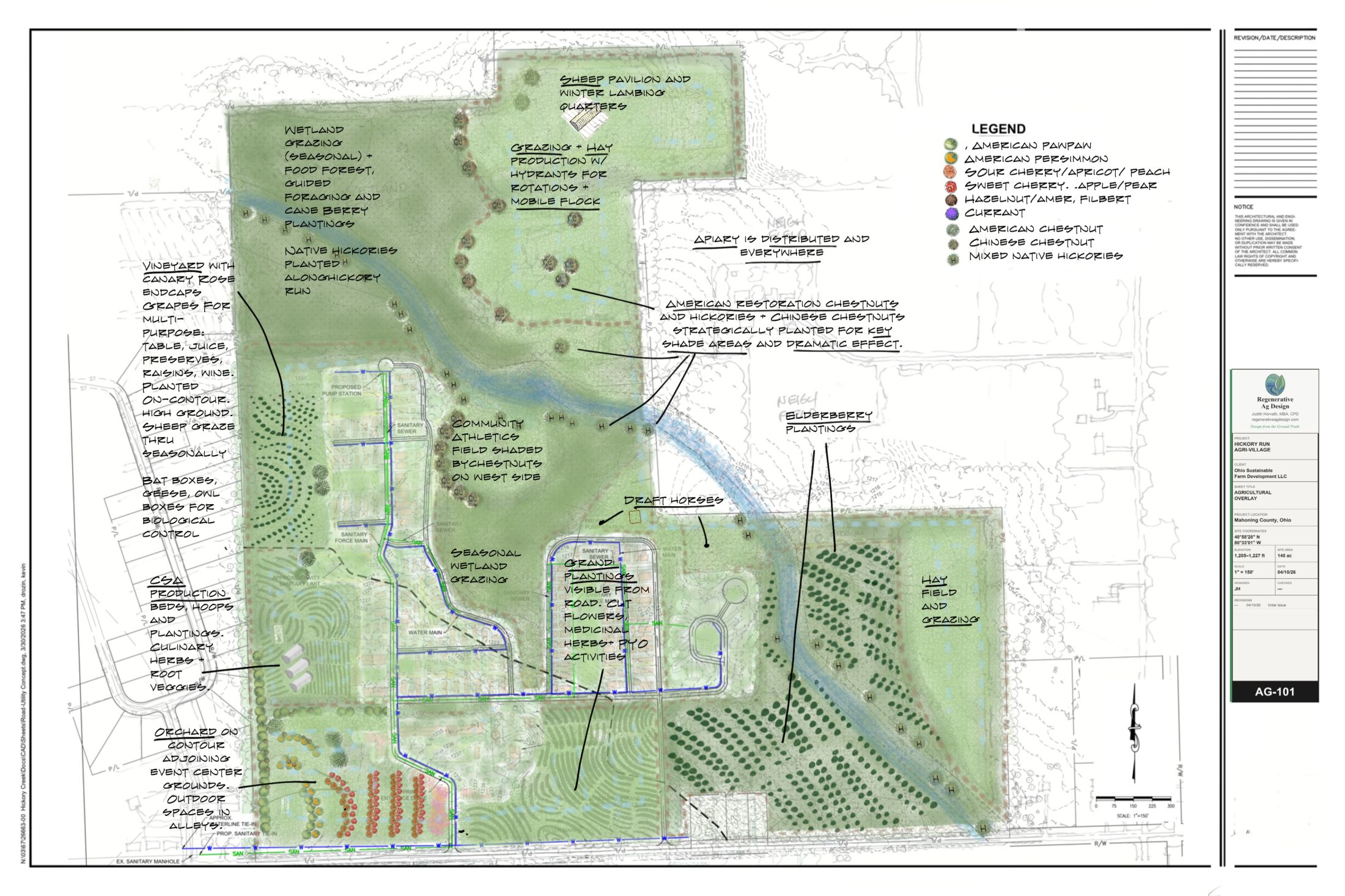
We did it the other way. The farm was designed first. We looked at how it would operate, its enterprises, the acreage needed, its water, its productivity and function. At the same time we thoughtfully designed the homes nearby and created a thoughtfully integrated village with an entrepreneurial vibe. We added live-and-work amenities and features. This is an intentional philosophical distinction.
Nine enterprises, chosen to feed each other.
Every acre has multiple functions as each enterprise works in a zero-waste loop with the others on the same land. This is why The Farm at Hickory Run thrives in a way that a showcase farm doesn't.
Where it all goes.
What's in the box, month by month.
Apples, pears, pumpkins, nuts, root crops. The market closes for the year. Pick-your-own fall veggies and the harvest festival. Preservation classes.
CSA season, March through November. A typical year on a northeast Ohio farm; the farm opens Fall 2026.
Every household is enrolled.
If you live at Hickory Run, you have a CSA share of our own certified regenerative organic (in process) produce, herbs, flowers, fruit, and berries. Nothing to sign up for and nothing to add on: from March through November, the farm will provide enough produce for the people in your household. Not a sample box, but plenty to cook from.
You can donate to others, keep it, personalize it, or add to it. There is honey, fruit, eggs, meat, flowers, herbs, and whatever the farm kitchen has put up that season: jams, salsas, preserves, juices, syrups, and more.
Pick it up at the farm store during a pickup window, or meet the horse-drawn wagon at delivery time in your pocket neighborhood. Your choice.
You can select from local seasonal food that changes throughout the year. Most people find they begin to cook differently after a season of it, and that turns out to be the part they like.
Liam Davis, Head Farmer.
Liam runs The Farm at Hickory Run. He and his family live here, in the original century farmhouse that came with the land.
That means he's on it at six in the morning and still on it at nine at night. He notices the lamb who isn't nursing properly, the water standing where it didn't stand last year, the day before either one turns into a problem.
He's organizing the seedlings in the hoophouses and making sure the wash-pack station is spotless, ensuring everyone's CSA share is organized and ready.
He's making sure the chickens are safe at night and explaining how the flowers are planted to feed the bees and hummingbirds to the kids who come through the farm on a field trip.
To him, this isn't a job, it's a calling. And that's why he moved here with his family to call Hickory Run home. He has a great team and they're all thrilled to be working and learning on The Farm at Hickory Run.
There's no line item to cut, because there's no line.
The farm sits on its own parcel, owned by a nonprofit and zoned for agriculture. It doesn't share a budget with the homes or the businesses.
The businesses don't carry the farm. They buy from it. The restaurant pays for produce. An event pays to be held in the field. And buys wedding flowers and ingredients for the wedding food. The cowork space pays for flower arrangements year round. You get the idea. They pay the farm the same terms they'd pay any supplier. The money moves toward the farm in exchange for something the farm actually grew. And it all stays in the local economy, providing jobs and livelihoods.
Not ready yet? Hear from the farm.
A short note each season: what's growing, what's being built, and when you can come see it.